
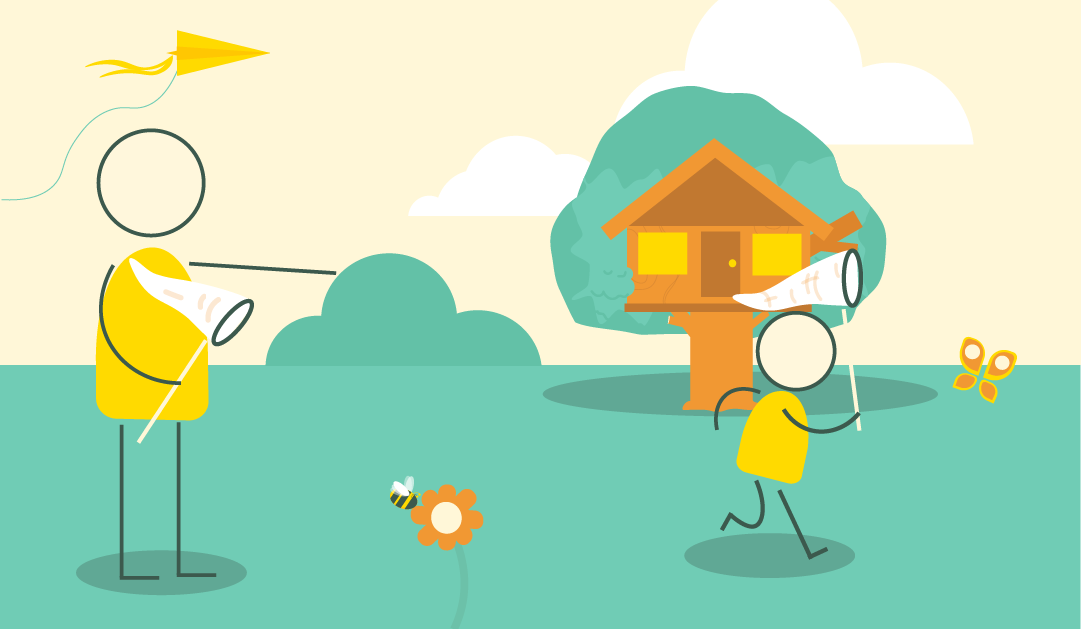
Summertime, kids, and mental health are all intertwined. Realizing just how influential this exciting season is on children’s mental wellness is extremely beneficial in regards to mindful behavior management. Summer break is often lauded as the most fun time of the year for kids. They count down the days as the school year winds to a close, vehemently awaiting the day they no longer have to wake up early and go to classes all day (at least for a couple months).
However, this brief reprieve in the academic year brings with it many challenges, no matter how many “parenting” skills you’ve learned. Typically during summertime, kids are suddenly thrust into relaxed – or even nonexistent – schedules, disorganized days, and probably way too much time spent playing video games and watching TV. For the sake of their mental health (and for the mental health of the adults in their life), boundaries, boredom, structure, consistency, and nature all need to be implemented.
Kids Blossom with Boundaries
Saying “No” does not make you a bad parent. Children need guidelines in their lives to help them learn how to navigate expectations, realize how to regulate their emotions, and discover how to respect others. Setting healthy, defined boundaries with your kids is a critical aspect of facilitating healthy family dynamics.
Being able to identify and adhere to boundaries teaches kids how to interact with others and society. Learning these lessons early in life grants life-long skills to kids, thus they’ll be able to mindfully navigate relationships later in life. This looks like developing stronger self-control and improves the ability to make positive choices.
If you’re an adult with kids in your life, it is your responsibility to create and maintain a stable and secure environment for them. Healthy boundaries are a huge part of this! Without clearly defined expectations and limits, kids are apt to feel insecure and anxious.
The goal of boundary-setting is to provide kids with the ability to know exactly when they’re behaviors are too much (or not enough), as well as the repercussions when they overstep the established boundaries. This equips kids to find and know their own limits. It also teaches very practical communication skills and allows children to express their feelings and frustrations as well as compromise and accept when things don’t go their way.
Kids blossom with boundaries because they are put in a position to adapt and grow while enjoying each moment to the fullest. But what happens when the walls are established, but the sandbox is empty?
Kids Bloom with Boredom
When these moments are left wide open, sometimes you may want to fill their time with a specific activity or event. However, a little boredom never hurt anybody. As a parent, it is not your job to entertain your kid 24/7. Truthfully, kids are very able to fill their moments of boredom with creative, fun, meaningful things themselves. And that’s a really good thing!
Once boundaries are established, letting children have space to use their imagination develops their minds and boosts self-esteem. Agency is a powerful tool, and allowing kids to have some control over their free-time (respecting the established boundaries of course) offers an invaluable lesson on problem solving, learning skills, and original thinking.
Furthermore, when kids are allowed to think for themselves, they can really start to lean into their unique interests as their personality develops. Self-discovery at such a young age is a fantastic avenue for instilling confidence and self-acceptance early in life. The impact this will have on their mental health throughout their life will be nearly immeasurable.
Boredom is not bad. Studies show it is extremely beneficial to kids! It really is simply an emotional state signaling that whatever is being experienced is not enjoyable at the time. Reframing these dips in engaging stimulation as a unique moment offering endless possibilities is helpful. From that place, self-awareness, creativity, and growth happen.
Kids bloom with boredom because it gives them a blank slate with which to proactively improve their current experience. There is also a lesson in perseverance in times of boredom, as sometimes it really can be frustrating when kids can’t figure out what to do instead. In those moments, offering suggestions or options can really help. Too much boredom within boundaries can be overwhelming, but another concept helps with that.
Kids Soar with Structure
If you showed up to work only knowing the time you were allowed to leave for the day and no other established structure, you’d be pretty overwhelmed and stressed, too. Likewise, kids need structure to excel. In a structured environment, your child knows what to expect when, and this organization really sets them up for success.
This is especially relevant for kids experiencing symptoms of ADHD. Visual schedules that provide structure to kids’ days are proven to increase satisfaction among kids and adults as well as reduce challenging child behaviors. Structure and routine are also associated with minimizing stress and anxiety as uncertainty is diminished.
Think of it this way: if boundaries provide the barriers to the sandbox, and boredom deposits the sand that allows for a blank slate to thrive upon, structure offers the means or tools to build and play with. Kids need structure to be able to learn, grow, adapt, create, and experience.
Teaching kids how to schedule their time mindfully – including chores, playtime, and opportunities for self-improvement – helps them independently develop good habits for later in life when they’ll be responsible for managing their own home and resources. This foundation of success is built upon structure-stemming organizational skills and self-esteem.
Kids soar with structure because it allows them the scaffolding to navigate their lives. This along with routine are key to helping kids minimize stress, anxiety, and symptoms of ADHD (if they are struggling with it). However, setting up schedules and maintaining structure really works best if done invariably and continually.
Kids Climb with Consistency
Boundaries, boredom, and structure build off one another. But without adamant follow-through, boundaries become burdens, boredom becomes chaos, and structure becomes restriction. Consistency is the glue that perpetuates the cycle in healthy, mindful ways.
Consistency means that we commit to following through with what we tell our kids we’re going to do. This builds trust and communicates to children that words are powerful. Without consistency, no rules can be taken seriously, and kids will suffer mentally, emotionally, and behaviorally. Unpredictability is proven to increase the risk of developing mental illness in children.
When boundaries are crossed, the established punishment must be administered. If boredom becomes a cry for attention, falling back on the rules of play, self-awareness, and resiliency is necessary. As structure is disregarded or ignored, reclaiming authority and returning to the schedule is vital. This is how consistency is enacted and maintained.
When things are out of your control and disruptions to the status-quo happen (and they will happen), falling back on boundaries, boredom, and structure efficiently and practically is the best way to manage the disorder and mayhem. Through consistency in these moments, kids will eventually begin to divert themselves back to the established rules that were set in your family.
Kids climb with consistency because it offers a solid foothold as they traverse through their days acknowledging boundaries, navigating boredom, and utilizing structure. Setting and enacting expectations is only half of the concern; maintaining them with consistency is where the big growth will happen in kids’ lives.
Kids Need Nature
One final piece of this puzzle deals less with expectations and order, and more with consistently interacting with a very specific and extremely healthy setting. Nature is vital to good mental health for everyone, and especially kids!
The benefits of prioritizing time spent out in the natural environment instead of inside staring at screens cannot be overstated. Research shows that exposure to greenspace positively impacts mental health in children. Furthermore, higher levels of greentime during early childhood were related to a lower risk of developing ADHD. Get those kids outside this summer!
While challenging at times to get kids to take a break from their screens and the comfortable AC indoors, every minute spent outside is worth it. To really reap the benefits of spending time in nature, look for spaces that have a lot of green. Whether it’s trees, grass, bushes, or garden plants, these natural areas offer the best boosts to mental health.
We’d advocate to get kids out in nature every day this summer. Granted, there are urban areas where greenspaces are very limited or entirely minimal. Do what you can, and try to find time to add in some retreats to nature with the kids during your summer schedules.
Kids need nature because it offers the perfect environment to blossom with boundaries, bloom with boredom, soar with structure, and climb with consistency. Reintegrating mental health into our modern lives looks like mindfully acknowledging our individual context and connecting with others authentically. Nature facilitates this exceptionally well, and it is usually fairly accessible to almost everyone for free.
You are Not Alone
Summertime can be exhausting and overwhelming for kids and parents alike. Mindfully utilizing boundaries, boredom, structure, consistency, and nature is key to having a summer marked by improved mental health leading into yet another school year just around the corner.
If you need help integrating these things into your own life or for your children, local mental health resources are your best bet! And if you’re in the North Texas area, www.FeelBetterFortWorth.com is full of local mental and behavioral health clinicians and businesses for all people – kids included!
Recent Comments